
Privately owned and publicly operated EV charging stations continue to populate nationwide. Whether they are commercial EV charging stations owned by businesses or public charging stations owned by local governments, EV charging adoption is growing rapidly.
In 2016, there were 44,354 EV charging ports and 17,810 charging stations in the United States according to the U.S. Department of Energy. As of March 2026, that number has more than quadrupled as there are over 270,000 charging ports and over 80,000 charging stations. The Department of Energy claims the U.S. will need 28 million EV charging ports by 2030, growing the current infrastructure by a multiple of ten in only a few years. Despite the exponential growth in EV infrastructure, there are rising concerns among EV drivers, installers, and managers.
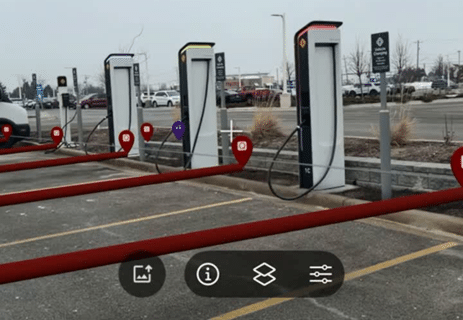
SiteMap® is powered by GPRS’ 99.8% accurate subsurface utility data that helps keep projects on time, on budget, and safe.
What is the EV Charging Delivery Landscape?
Rising Demand for EV Charging Infrastructure
The usage of public EV charging ports reached an estimated 141 million sessions in 2025, which marked a 30% increase year-over-year.
The increase in EV adoption indicates a higher demand for EV charging infrastructure. However, in 2025, charging sessions increased by 34% while new charging ports only grew by 16%, according to a ChargePoint report.
Nationwide efforts are taking shape as federal programs develop a national EV charging infrastructure network.
The U.S. Department of Transportation (DOT) enacted the National Electric Vehicle Infrastructure (NEVI) Formula Program in 2021, where they allocated $5 billion for states to “strategically deploy electric vehicle (EV) chargers and to establish an interconnected network to facilitate data collection, access, and reliability.”
As the nation needs more charging stations at an increasingly faster pace, projects will require tighter timelines and higher reliability expectations to meet the demand.
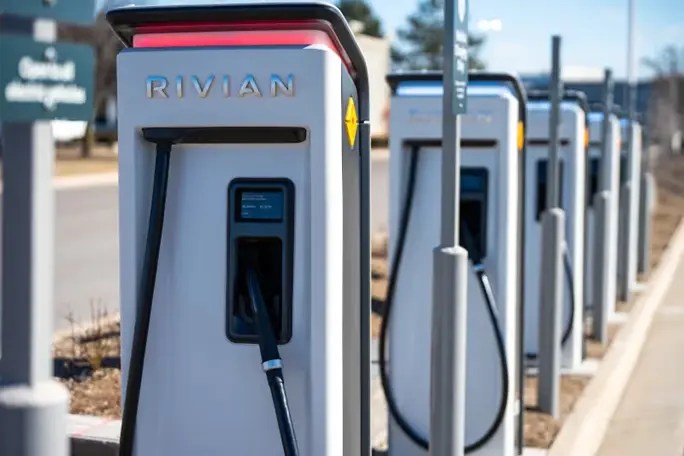
The NEVI program was structured to run from 2022-2026, but the deployment of additional charging networks is expected not continue into 2027 and 2028.
Permitting Process
The installation of EV charging stations involves extensive permit requests.
Before installing anything, property managers must obtain the proper permits to avoid citations, fines, business closures, and public endangerment from improper practices.
There are different permits for residential and commercial projects. Account to workflow specialists, PermitFlow, the permitting process can take 1-4 weeks for residential projects and 4 weeks to multiple months for commercial, as it depends on the scope of work.
The permitting process for commercial buildings includes:
- Site assessments conducted by a qualified electrical contractor that assesses the electrical capacity and layout of the property
- Submitting detailed site plans like electrical schematics and load calculations to local government agencies
- Inspections that ensure the EV station meets building codes
Commercial EV’s Intricate Construction Process
Once officials approve the permits, the installation process can begin.
Installing EV charging stations involves:
- Upgrades as needed to the existing electrical systems
- Running electrical conduit
- Installing protective bollards
- Mounting the chargers to walls or support structures
- Connecting the unit to the site’s electrical panel.
The process can take weeks to years, according to industry advocates like the Center for Sustainable Energy, depending on the scope of the job and how extensive the necessary upgrades are.
Cutting concrete, trenching, and directional boring is usually required for installation. Any time a project involves breaking ground, there is the possibility of striking utilities or other subsurface obstructions, especially if the utility information is outdated. According to Construction Dive, damage to buried utilities imposes more than $61 billion per year in waste and excess costs on communities.
Without accurate utility data, the chances of striking a utility line are very high, which can lead to massive delays, high repair costs, and potentially fatal injuries for workers.
Insufficient Grid Capacity Poses Risk
One of the biggest obstacles when installing EV chargers is the lack of grid capacity.
Many locations lack the electrical capacity needed to support EV charging stations. Because of this and the exponential rise in EV demand, building managers have no choice but to implement upgrades to electrical panels, transformers, and/or utilities to avoid missing out on the business of EV drivers. These upgrades are also very expensive and often slow to install.
The massive expansion of EV infrastructure is also affecting citywide grid systems. Uncontrolled charging during peak hours, like mornings and evenings, can strain electricity systems, leading to reliability issues.
However, there are initiatives in place like grid modernization efforts and the implementation of smart grid technologies to increase electrical capacity and use AI-based forecasting to monitor energy usage.
Mitigating for Unreliable EV Charging Performance
There is a rising concern among EV drivers regarding the reliability of public EV chargers. A recent study conducted by Harvard Business School analyzed 1 million EV charging customer reviews across North America, Europe, and Asia.
In the study, drivers mentioned coming across broken or malfunctioning equipment often. In the U.S. specifically, drivers claimed that charging stations were less reliable than gas stations, having an average of one in five chargers not working properly.
One way that the U.S. is combating the unreliability label placed on EV chargers is through a three-pronged approach stated by the Federal Highway Administration (FHWA) in February of 2023. They planned to address the issue by:
- Increasing the technical skills and qualifications required for electrical technicians working on Electric Vehicle Supply Equipment (EVSE)
- Requiring a charging station to be fully functional, connected, and available to recharge a driver’s vehicle at least 97% of the time
- Requiring the data for error codes and the duration of an outage during any unsuccessful charging sessions
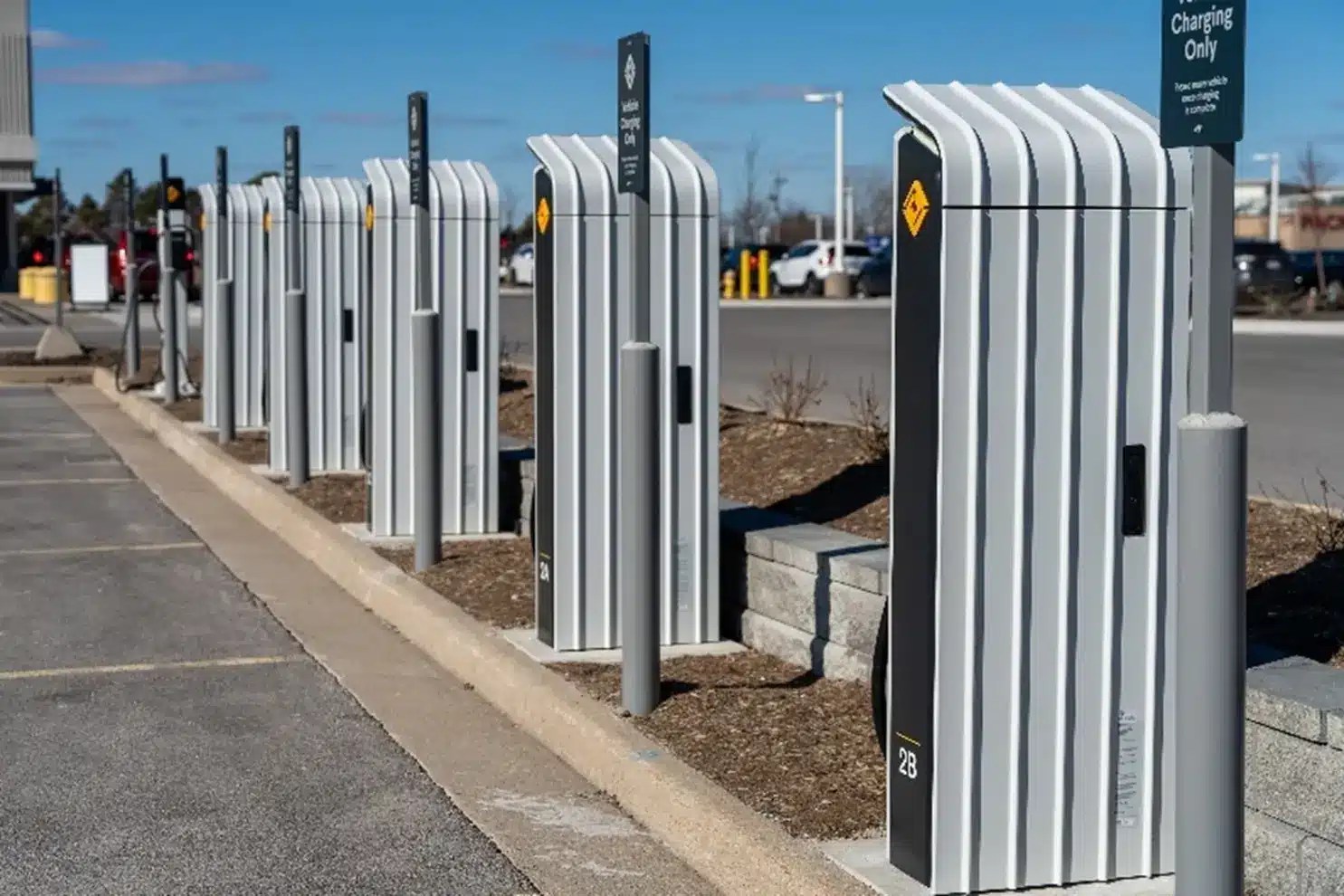
GPRS provides above and below-ground documentation to ensure projects meet safety and reliability standards.
Thank you for reading this excerpt. Click here to read the full article. You’ll learn how accurate subsurface utility data can reduce risk, avoid costly delays, and ensure reliable EV charging installation and management.
Click below to schedule your free demo today!
FREQUENTLY ASKED QUESTIONS
How do I export data from SiteMap?
Exporting is simple. From your Digital Plan Room or Map Viewer, you can download files in formats like DWG, PDF, or orthophotos. This lets you take interactive maps and records from SiteMap into CAD, GIS, or other software without disrupting your workflow.
Can SiteMap scale as my portfolio grows?
Yes. SiteMap was created to accommodate scalability. Whether you oversee a single facility or a nationwide portfolio, the platform merges your data into one interactive system. You can keep adding new projects using the same workflow. This lets you expand without changing your process.
How secure are my records in SiteMap?
SiteMap uses a cloud-based setup with controlled access permissions, so your data stays safe and recoverable. All files, maps, and attachments are stored in one central location. This makes collaboration simple and cuts the risk of losing data.