
Healthcare facilities are continually updating and expanding to meet the demands of a growing population, incorporate advancements in medicine, respond to rising patient expectations, and comply with evolving regulatory requirements.
New buildings, renovations, and upgrades are key to delivering high-quality healthcare. Healthcare organizations invest in construction, renovation, and facility upgrades to expand capacity and integrate new medical technologies. These improvements help them serve their communities better, streamline operations, and meet regulatory standards.
A recent survey conducted by the American Society for Health Care Engineering’s (ASHE’s) Health Facilities Management magazine gathered insights from hospital and health system managers and executives who oversee construction projects. The survey explored current trends in construction, services, and equipment, as well as planning, design, and construction (PDC) budgets.
Respondents expect budget increases from 2024 to 2025 in several areas:
- New hospital construction: 46%
- Renovations: 59%
- Infrastructure upgrades: 61%
- Off-site facility projects: 44%
“There’s certainly a high demand for health care… we have an aging population, and people are staying in the hospital longer, so we’re seeing an increase in the number of planned bed towers,” says Mark Howell, Senior Vice President Skanska Construction Company.
What are the reasons healthcare facilities complete construction, renovation, and modification projects?
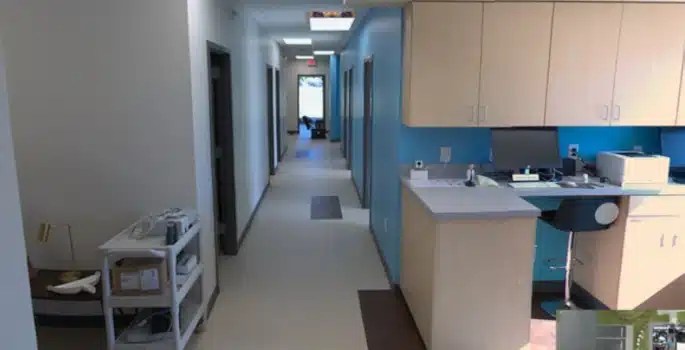
Healthcare organizations invest in construction, renovation, and facility upgrades to expand capacity and integrate new medical technologies.
Construction of New Facilities
Healthcare facilities often start new construction projects to meet growing patient demand and improve healthcare services. This includes building new hospital campuses, medical office buildings, nursing homes, pharmaceutical facilities and other healthcare-related structures. New construction provides the opportunity to design spaces that improve patient experience. It also helps clinical staff work more efficiently and meet important regulations like ADA compliance, infection control, and energy efficiency.
Renovations and Expansions
Increased patient capacity is a key reason for healthcare facility renovations and expansions. As the population ages and the demand for healthcare rises, facilities need to adapt by adding more beds, exam rooms, and specialized treatment areas. Renovation projects also help to modernize existing spaces and add new services. These efforts often focus on projects like building state-of-the-art cancer centers, upgrading operating rooms, or creating dedicated wings for physical therapy, rehabilitation, and post-operative care. Whether through expansion or remodeling, these projects are essential to ensure healthcare providers can deliver high-quality care to a growing population.
Upgrade Aging Infrastructure
Healthcare facilities undertake construction, renovation, and modifications to upgrade aging infrastructure. Many hospitals and clinics operate in buildings that were constructed decades ago. Over time, systems such as plumbing, electrical, and HVAC have become outdated. Modernizing these systems not only improves safety and reliability but also enhances energy efficiency and reduces long-term maintenance costs.
According to the Health Facilities Management survey mentioned above, 80% of respondents reported commissioning healthcare facility projects to update fire safety systems, building automation and controls, and electrical systems.
Regulatory Compliance
Another reason for healthcare construction and renovation is the need to meet changing regulations. Healthcare environments are subject to strict codes and guidelines, including ADA (Americans with Disabilities Act) compliance to ensure accessibility for all patients, infection control protocols to prevent the spread of disease, and fire safety codes to protect occupants in emergencies. Renovations help facilities align with these requirements, avoid penalties, and ensure high-quality care.
Integrate New Medical Technologies
Construction projects support the integration of new medical technologies. As healthcare advances, facilities must adapt to accommodate cutting-edge equipment such as robotic surgical systems, advanced imaging devices, and infrastructure wayfinding. These upgrades often require reconfiguring spaces, reinforcing structural elements, installing specialized equipment, and developing wayfinding apps.
Case Study: Reality Capture of Six Hospital Parking Garages for Wayfinding
Workflow Efficiency
Renovations also play a key role in enhancing workflow efficiency. Inefficient layouts can create bottlenecks, increase travel distances for staff, and cause delays in patient care. Redesigning spaces with clinical team input can help facilities improve connectivity. This change can streamline operations and create environments that boost staff productivity while enhancing patient comfort.
“The desire to build more and newer health care facilities as well as renovate and improve current locations for both staff and patients may be due to hospitals looking to claim more of the market share and attract new patients in an increasingly competitive environment, says,” Angela Mazzi, FAIA, FACHA, EDAC, principal at GBBN Architects.
Thank you for reading this excerpt. Read the full article to learn how GPRS and SiteMap® can support your healthcare projects.